
« PREVIOUS ENTRY
Here’s what you call those invisible Google people, pt. 1
NEXT ENTRY »
Somebody please stop me from buying one of these
There’s a cool review in the Sunday New York Times Book Review about a new biography of L. Frank Baum — the guy who wrote all the Wizard of Oz books.
Interestingly, though, it doesn’t mention the fact that Baum was known not just for the Oz books — but for being a major force in creating advertising as we know it. In the utterly superb 1994 book Land of Desire, William Leach explores how Baum became obsessed with the art of window displays.
Baum wrote the book on advertising — literally. In 1897, he began publishing The Show Window, a trade magazine devoted to the art of window dressing, a big deal back in nascent days of huge department stores. Those old department stores were quite a flash-point in the birth of American consumerism. Leach argues they essentially invented the modern culture of consumption. Before Baum and his colleagues invented advertising, department stores were just dull warehouses filled with drab piles of goods. In barely a decade, they were transformed into dramatic dioramas of lifestyle. When you walk into Ikea and see how they’ve set up the goods to look like typical households … yep, Baum pretty much invented that. It was so successful that soon the department stores had to invent and issue the first-ever credit cards, to hand out to their crazed customers.
At the center this transformation was the art of window dressing — the first experience that most Americans had with the advertising of opulence. You read excerpts from Baum’s advertising texts, and suddenly those Oz stories take on a whole new meaning. The Emerald City, encrusted with jewels and possessed of horses that shifted colors, is Baum’s most beautiful and florid fantasy of capitalism in full consumerist bloat.
It was a genuinely weird, dizzying moment for the nation. They used to have debates about whether the use of huge panes of glass in shop-windows was ethical — i.e. whether it was morally okay to tempt people with so many lovely goods while they tried to walk about the city doing their business. It rather eerily prefigures our modern debates about advertising colonizing every waking moment of our lives. Of course, these days, it seems kinda quaint to wonder about the ethics of whipping up desire. We pay extra for the clothes with corporate logos.
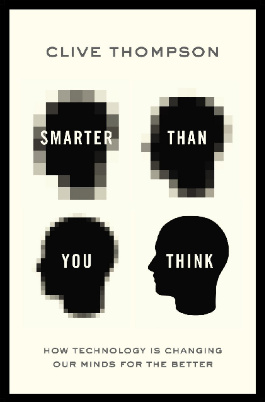
I'm Clive Thompson, the author of Smarter Than You Think: How Technology is Changing Our Minds for the Better (Penguin Press). You can order the book now at Amazon, Barnes and Noble, Powells, Indiebound, or through your local bookstore! I'm also a contributing writer for the New York Times Magazine and a columnist for Wired magazine. Email is here or ping me via the antiquated form of AOL IM (pomeranian99).
ECHO
Erik Weissengruber
Vespaboy
Terri Senft
Tom Igoe
El Rey Del Art
Morgan Noel
Maura Johnston
Cori Eckert
Heather Gold
Andrew Hearst
Chris Allbritton
Bret Dawson
Michele Tepper
Sharyn November
Gail Jaitin
Barnaby Marshall
Frankly, I'd Rather Not
The Shifted Librarian
Ryan Bigge
Nick Denton
Howard Sherman's Nuggets
Serial Deviant
Ellen McDermott
Jeff Liu
Marc Kelsey
Chris Shieh
Iron Monkey
Diversions
Rob Toole
Donut Rock City
Ross Judson
Idle Words
J-Walk Blog
The Antic Muse
Tribblescape
Little Things
Jeff Heer
Abstract Dynamics
Snark Market
Plastic Bag
Sensory Impact
Incoming Signals
MemeFirst
MemoryCard
Majikthise
Ludonauts
Boing Boing
Slashdot
Atrios
Smart Mobs
Plastic
Ludology.org
The Feature
Gizmodo
game girl
Mindjack
Techdirt Wireless News
Corante Gaming blog
Corante Social Software blog
ECHO
SciTech Daily
Arts and Letters Daily
Textually.org
BlogPulse
Robots.net
Alan Reiter's Wireless Data Weblog
Brad DeLong
Viral Marketing Blog
Gameblogs
Slashdot Games

