
« PREVIOUS ENTRY
$2,000: The price of getting a PS3 four days before anyone else

Here’s a lovely, intriguing — and, in keeping with the holiday spirit, totally depressing — bit of holiday research: It turns out that the more familiar you are with your spouse or partner, the more likely you are to buy gifts they hate!
That’s the result of an intriguing study recently done by Davy LeRouge and Luk Warlop (PDF link), two European professors of marketing. They took a few hundred couples, showed them pictures of furniture sets, and asked them to predict which ones their partners would like. Sometimes the people simply had to guess; in other situations, the experimenters would help them out by telling them which furniture settings their partners themselves had picked. And then the researchers also asked the subjects to predict which furniture settings would please a total stranger.
The result? People were pretty good at predicting the likes and dislikes of total strangers — yet astonishly crappy at figuring out the preferences of their closest and dearest partners. And when they were given new information about which furniture their partners picked for themselves? It didn’t help. They were still better at picking gifts for total strangers than for their loved ones.
Why? Possibly, the professors theorized, because when we’re very familiar with our spouses it can be hard to separate our own preferences from theirs. We mistake things we’d like for things they’d like. Also, we tend to cherish hidebound ideas about what our partners are like, and we’re unable to step outside those assumptions — even when our partners themselves give us fresh, new information. When we face down strangers, we have none of those biases and thus are able to more clearly see them as they are.
Our findings reveal that being familiar with the person for whom you are predicting the product attitudes is a burden rather than an advantage, mainly because it prevents people from taking full advantage of newly provided information about that person’s product attitudes … Further evidence shows that it is the extensive amount of vivid information that the predictors hold about familiar others that prevents them from selecting more valid prediction cues.
Deck the halls. Mind you, maybe these sorts of errors are propping up the world economy. Think of it this way: What you really want is a new pair of jeans … but instead, your partner thoughfully buys you a bunch of CDs of bands that he likes and you loathe. So you go out after the holidays and buy the jeans yourself. Essentially, there have been two rounds of gift-buying: Your partner’s addled, narcissistic purchase of crap you don’t want, and your own purchase of things you’d actually like. Double the spending — double the boost to the economy! And double the landfill!
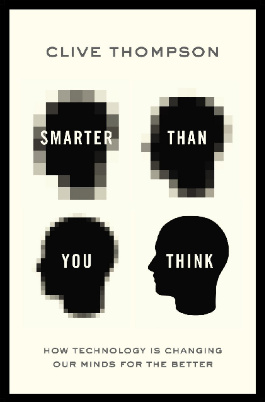
I'm Clive Thompson, the author of Smarter Than You Think: How Technology is Changing Our Minds for the Better (Penguin Press). You can order the book now at Amazon, Barnes and Noble, Powells, Indiebound, or through your local bookstore! I'm also a contributing writer for the New York Times Magazine and a columnist for Wired magazine. Email is here or ping me via the antiquated form of AOL IM (pomeranian99).
ECHO
Erik Weissengruber
Vespaboy
Terri Senft
Tom Igoe
El Rey Del Art
Morgan Noel
Maura Johnston
Cori Eckert
Heather Gold
Andrew Hearst
Chris Allbritton
Bret Dawson
Michele Tepper
Sharyn November
Gail Jaitin
Barnaby Marshall
Frankly, I'd Rather Not
The Shifted Librarian
Ryan Bigge
Nick Denton
Howard Sherman's Nuggets
Serial Deviant
Ellen McDermott
Jeff Liu
Marc Kelsey
Chris Shieh
Iron Monkey
Diversions
Rob Toole
Donut Rock City
Ross Judson
Idle Words
J-Walk Blog
The Antic Muse
Tribblescape
Little Things
Jeff Heer
Abstract Dynamics
Snark Market
Plastic Bag
Sensory Impact
Incoming Signals
MemeFirst
MemoryCard
Majikthise
Ludonauts
Boing Boing
Slashdot
Atrios
Smart Mobs
Plastic
Ludology.org
The Feature
Gizmodo
game girl
Mindjack
Techdirt Wireless News
Corante Gaming blog
Corante Social Software blog
ECHO
SciTech Daily
Arts and Letters Daily
Textually.org
BlogPulse
Robots.net
Alan Reiter's Wireless Data Weblog
Brad DeLong
Viral Marketing Blog
Gameblogs
Slashdot Games

