
« PREVIOUS ENTRY
The “seeing-eye tongue”
NEXT ENTRY »
National Video Games Day
On Sept. 21 at 2:57 Eastern Daylight Time, the space probe Galileo will fly into the planet Jupiter, destroying itself in the planet’s 1200-degree atmosphere. NASA is intentionally destroying it; they’re worried that it might have Earth microbes aboard, and don’t want it to crash into Europa and accidentally infect that planet — a strong prospect for harboring its own, germane forms of life. NASA, being filled with fun-loving geeks as it is (and I am actually not saying that ironically), has set up a countdown clock so you can follow the space-probe’s fate, down the final instants.
If you want to further stoke your Galileo nostalgia (and who wouldn’t?), check out the superb piece Michael Benson wrote in last week’s New Yorker about the probe. Galileo truly was The Little Spacecraft That Could. Pretty much everything that could go wrong did go wrong, yet the Xtreme hackers at NASA managed to pull their fat out of the fire every time. For example, at one point, NASA techs discovered that Galileo’s antennas had been so badly damaged that they could send back only one picture per month — instead of the originally-intended one picture per minute. To fix the problem, they actually rewrote the entire code for Galileo remotely, from Earth: “a complete brain transplant over a four-hundred-million-mile radio link”, as one team member put it.
Here’s another delightful moment. One of the scientists looked at two different pictures Galileo had taken of the moon Ida, seperated by thousands of miles. He realized he use them to produce the first-ever 3D image of a foreign moon.
“So I processed those pictures, and shot negatives of them, and brought them home—that was late on a Friday,” he told me. “I had a darkroom at home, and later that night I made eight-by-tens of these two, and I had pinched a stereoscope from work. I popped in these two wonderful eight-by-tens and became the first human being to see a stereo image of an asteroid at high resolution!” Geissler chuckled. “That entire weekend, anyone who came close to my door was dragged over—‘Look at this!’ You know, the mailman, the babysitter. That was really a thrill.”
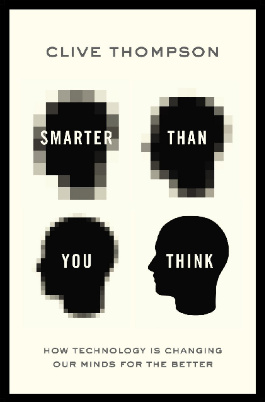
I'm Clive Thompson, the author of Smarter Than You Think: How Technology is Changing Our Minds for the Better (Penguin Press). You can order the book now at Amazon, Barnes and Noble, Powells, Indiebound, or through your local bookstore! I'm also a contributing writer for the New York Times Magazine and a columnist for Wired magazine. Email is here or ping me via the antiquated form of AOL IM (pomeranian99).
ECHO
Erik Weissengruber
Vespaboy
Terri Senft
Tom Igoe
El Rey Del Art
Morgan Noel
Maura Johnston
Cori Eckert
Heather Gold
Andrew Hearst
Chris Allbritton
Bret Dawson
Michele Tepper
Sharyn November
Gail Jaitin
Barnaby Marshall
Frankly, I'd Rather Not
The Shifted Librarian
Ryan Bigge
Nick Denton
Howard Sherman's Nuggets
Serial Deviant
Ellen McDermott
Jeff Liu
Marc Kelsey
Chris Shieh
Iron Monkey
Diversions
Rob Toole
Donut Rock City
Ross Judson
Idle Words
J-Walk Blog
The Antic Muse
Tribblescape
Little Things
Jeff Heer
Abstract Dynamics
Snark Market
Plastic Bag
Sensory Impact
Incoming Signals
MemeFirst
MemoryCard
Majikthise
Ludonauts
Boing Boing
Slashdot
Atrios
Smart Mobs
Plastic
Ludology.org
The Feature
Gizmodo
game girl
Mindjack
Techdirt Wireless News
Corante Gaming blog
Corante Social Software blog
ECHO
SciTech Daily
Arts and Letters Daily
Textually.org
BlogPulse
Robots.net
Alan Reiter's Wireless Data Weblog
Brad DeLong
Viral Marketing Blog
Gameblogs
Slashdot Games

