
« PREVIOUS ENTRY
Ludology vs. narrative
NEXT ENTRY »
Virtual tourists
Over at Fast Company, Charles Leadbetter pushes an interesting idea: The increasing scientific, political, and cultural importance of “pro-ams” — amateurs who hold themselves to professional standards. One good example is in astronomy: Many astronomical discoveries these days are coming from amateurs with backyard telescopes, because technology has made those telescopes increasingly powerful. Or consider Linux, an operating system that was created by volunteers, yet which now rivals Microsoft’s top products. In the world of music, cut-and-paste apps like Apple’s Garage Band are making amateur performers increasingly polished.
The interesting thing, as Leadbetter points out, is that this completely reverses the trends of the last few hundred years:
The 20th century was marked by the rise of professionals in medicine, science, education, and politics. In one field after another, amateurs and their ramshackle organizations were driven out by people who knew what they were doing and had certificates to prove it. Now that historic shift seems to be reversing. Even as large corporations extend their reach, we’re witnessing the flowering of Pro-Am, bottom-up self-organization.
Interestingly, an example he doesn’t mention is blogging. “Amateur” authors — I hesitate to call them “amateurs” because some bloggers are more fun to read than many paid professionals — are getting so much audience these days that the pros are freaking out, as the New York Times Magazine documented last week in its excellent story on political bloggers.
Anyway, Leadbetter is set to release a book-length version of his argument in November, and I’ll be intrigued to read it.
(Thanks to Slashdot for this one!)
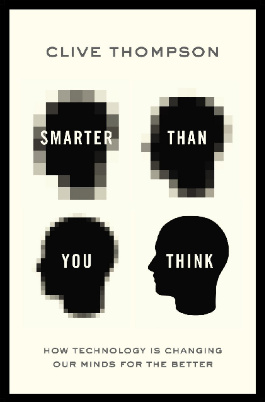
I'm Clive Thompson, the author of Smarter Than You Think: How Technology is Changing Our Minds for the Better (Penguin Press). You can order the book now at Amazon, Barnes and Noble, Powells, Indiebound, or through your local bookstore! I'm also a contributing writer for the New York Times Magazine and a columnist for Wired magazine. Email is here or ping me via the antiquated form of AOL IM (pomeranian99).
ECHO
Erik Weissengruber
Vespaboy
Terri Senft
Tom Igoe
El Rey Del Art
Morgan Noel
Maura Johnston
Cori Eckert
Heather Gold
Andrew Hearst
Chris Allbritton
Bret Dawson
Michele Tepper
Sharyn November
Gail Jaitin
Barnaby Marshall
Frankly, I'd Rather Not
The Shifted Librarian
Ryan Bigge
Nick Denton
Howard Sherman's Nuggets
Serial Deviant
Ellen McDermott
Jeff Liu
Marc Kelsey
Chris Shieh
Iron Monkey
Diversions
Rob Toole
Donut Rock City
Ross Judson
Idle Words
J-Walk Blog
The Antic Muse
Tribblescape
Little Things
Jeff Heer
Abstract Dynamics
Snark Market
Plastic Bag
Sensory Impact
Incoming Signals
MemeFirst
MemoryCard
Majikthise
Ludonauts
Boing Boing
Slashdot
Atrios
Smart Mobs
Plastic
Ludology.org
The Feature
Gizmodo
game girl
Mindjack
Techdirt Wireless News
Corante Gaming blog
Corante Social Software blog
ECHO
SciTech Daily
Arts and Letters Daily
Textually.org
BlogPulse
Robots.net
Alan Reiter's Wireless Data Weblog
Brad DeLong
Viral Marketing Blog
Gameblogs
Slashdot Games

