
« PREVIOUS ENTRY
Fill ‘er up
NEXT ENTRY »
A bioterror attack in World of Warcraft
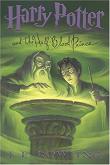
In the Harry Potter universe, how precisely does one become a wizard? Well, if you’ve read the J. K. Rowling books, you’ll know that the world is divided into magical peoples — wizards and witches — and normal, unmagical ones, the muggles. A wizard or witch can be born from two magical parents, two muggles, or a mixture thereof — a half-blood.
This got a couple of genetic scientists in Britain wondering: What are the chromosonal implications here? They quickly set pen to paper and produced one of the more curious letters that has ever appeared in Nature: A Darwinian explanation of the Harry Potter’s inheritance of magical abilities. To quote:
This suggests that wizarding ability is inherited in a mendelian fashion, with the wizard allele (W) being recessive to the muggle allele (M). According to this hypothesis, all wizards and witches therefore have two copies of the wizard allele (WW). Harry’s friends Ron Weasley and Neville Longbottom and his arch-enemy Draco Malfoy are ‘pure-blood’ wizards: WW with WW ancestors for generations back. Harry’s friend Hermione is a powerful muggle-born witch (WW with WM parents). Their classmate Seamus is a half-blood wizard, the son of a witch and a muggle (WW with one WW and one WM parent). Harry (WW with WW parents) is not considered a pure-blood, as his mother was muggle-born.
There may even be examples of incomplete penetrance (Neville has poor wizarding skills) and possible mutations or questionable paternity: Filch, the caretaker, is a ‘squib’, someone born into a wizarding family but with no wizarding powers of their own.
Cool enough. But even better is that three other scientists immediately dashed off a following letter that disputed the theory. Noting that “Hermoine’s parents were muggle dentists who lack any family history of wizarding,” they find “the assumption that wizarding has a genetic basis to be deterministic and unsupported by available evidence.”
Finer tongue-in-cheek science cannot be had. Though they weren’t merely being witty. The original scientists wrote their Nature letter as a “teachable moment”: They noted that since genetics are difficult to teach to young children, Potter’s universe offered a unique opportunity for science teachers to talk about DNA and inheritance. But this also, of course, implies the teaching of evolution, which makes you wonder which will be the bigger reason for the evangelical right to hate J. K. Rowling: Because she’s indoctrinating kids in witchcraft — or in Darwinian science?
(Thanks to Samuel Arbesman for this one!)
I'm Clive Thompson, the author of Smarter Than You Think: How Technology is Changing Our Minds for the Better (Penguin Press). You can order the book now at Amazon, Barnes and Noble, Powells, Indiebound, or through your local bookstore! I'm also a contributing writer for the New York Times Magazine and a columnist for Wired magazine. Email is here or ping me via the antiquated form of AOL IM (pomeranian99).
ECHO
Erik Weissengruber
Vespaboy
Terri Senft
Tom Igoe
El Rey Del Art
Morgan Noel
Maura Johnston
Cori Eckert
Heather Gold
Andrew Hearst
Chris Allbritton
Bret Dawson
Michele Tepper
Sharyn November
Gail Jaitin
Barnaby Marshall
Frankly, I'd Rather Not
The Shifted Librarian
Ryan Bigge
Nick Denton
Howard Sherman's Nuggets
Serial Deviant
Ellen McDermott
Jeff Liu
Marc Kelsey
Chris Shieh
Iron Monkey
Diversions
Rob Toole
Donut Rock City
Ross Judson
Idle Words
J-Walk Blog
The Antic Muse
Tribblescape
Little Things
Jeff Heer
Abstract Dynamics
Snark Market
Plastic Bag
Sensory Impact
Incoming Signals
MemeFirst
MemoryCard
Majikthise
Ludonauts
Boing Boing
Slashdot
Atrios
Smart Mobs
Plastic
Ludology.org
The Feature
Gizmodo
game girl
Mindjack
Techdirt Wireless News
Corante Gaming blog
Corante Social Software blog
ECHO
SciTech Daily
Arts and Letters Daily
Textually.org
BlogPulse
Robots.net
Alan Reiter's Wireless Data Weblog
Brad DeLong
Viral Marketing Blog
Gameblogs
Slashdot Games

