
« PREVIOUS ENTRY
The first hydrogen-powered car is here! Except it’s a toy
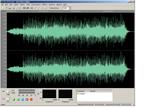
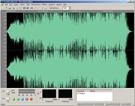
Pull out a vinyl record from the 70s or early 80s, and listen to it. Odds are it’ll have a big dynamic range — it’ll be whisper-quiet in some parts and booming loud in others. You’ll pick up new nuances every time you listen to it. Now listen to any music track recorded in the last ten years, and it’ll be radically different. That dynamic range is gone: The entire track is loud, all the way through. The sound sounds a lot more intense, and it “grabs” you more quickly the first time you hear it. But does it still reward re-listening?
Nope, says a writer at Stylus magazine. In this amazing and lengthy piece, he argues that the “loudness wars” are destroying music. Record labels for decades have tried to make records louder, on the mostly-correct theory that louder music is more likely to pull you in on first listen. But the way you make music louder is via “compression”. In a normal recording of music, the loudest parts — the peaks — are much higher than the quietest ones, the valleys. Compression shrinks the difference between the peaks and valleys, so there’s less dynamic range; this frees up more room up top so you can boost the whole volume of the entire song.
See those two graphs overhead? The original is Abba’s “One of Us” as recorded in 1981, and you can see the wide dynamic range. The second graph is “One of Us” remastered in 2005, compressed to make all of the sound-wave “big” and louder. The author also argues that the jump-the-shark moment for the recording industry was … Oasis. In 1987, the average album like Appetite for Destruction by Guns ‘N Roses had a dynamic range of 15 decibels. Oasis’ 1994 (What’s the Story) Morning Glory had a range of a mere 8 decibels — compressed to make it louder and louder.
But so what? Why does this hurt music? Because of the psychoacoustics of how loudness and quietness affects us. When a song has less dynamic range, even if it’s louder we are — paradoxically — more likely to tune it out, as the author argues. It’s worth reading his entire essay, but here are some excerpts:
I’ve messed around with lots of home-recording technology — for music and for my Wired podcasts — and this guy’s right. Compression is addictive. I use a Joe Meek MQ3 to compress recorded instruments and voices, then T-Racks’ software compressor to further pump up tracks inside Pro Tools, and with each rev the sound gets fatter and more intense. But maybe I’m removing all dynamic appeal from what I’m recording?
(Thanks to Andrew Hearst for this one!)
I'm Clive Thompson, the author of Smarter Than You Think: How Technology is Changing Our Minds for the Better (Penguin Press). You can order the book now at Amazon, Barnes and Noble, Powells, Indiebound, or through your local bookstore! I'm also a contributing writer for the New York Times Magazine and a columnist for Wired magazine. Email is here or ping me via the antiquated form of AOL IM (pomeranian99).
ECHO
Erik Weissengruber
Vespaboy
Terri Senft
Tom Igoe
El Rey Del Art
Morgan Noel
Maura Johnston
Cori Eckert
Heather Gold
Andrew Hearst
Chris Allbritton
Bret Dawson
Michele Tepper
Sharyn November
Gail Jaitin
Barnaby Marshall
Frankly, I'd Rather Not
The Shifted Librarian
Ryan Bigge
Nick Denton
Howard Sherman's Nuggets
Serial Deviant
Ellen McDermott
Jeff Liu
Marc Kelsey
Chris Shieh
Iron Monkey
Diversions
Rob Toole
Donut Rock City
Ross Judson
Idle Words
J-Walk Blog
The Antic Muse
Tribblescape
Little Things
Jeff Heer
Abstract Dynamics
Snark Market
Plastic Bag
Sensory Impact
Incoming Signals
MemeFirst
MemoryCard
Majikthise
Ludonauts
Boing Boing
Slashdot
Atrios
Smart Mobs
Plastic
Ludology.org
The Feature
Gizmodo
game girl
Mindjack
Techdirt Wireless News
Corante Gaming blog
Corante Social Software blog
ECHO
SciTech Daily
Arts and Letters Daily
Textually.org
BlogPulse
Robots.net
Alan Reiter's Wireless Data Weblog
Brad DeLong
Viral Marketing Blog
Gameblogs
Slashdot Games

