
« PREVIOUS ENTRY
Study: Animal shelters killing more cats, saving more dogs
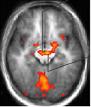
This is a pretty cool piece of research, which began when a group of Stanford scientists decided to investigate whether financial rewards help motivate people to remember things. So they took a bunch of subjects and offered them various rewards — from “nothing” to $5 — for memorizing pictures. When given a surprise quiz three weeks later, the subjects were much better able to recall the pictures they’d been paid to recall. In fact, the more money you pay them, the better they’d recall stuff.
No surprise there, in a way. Spouses have complained for years that their career-addled partners can recall minor details of contract negotiations at work, but can’t remember their kids’ birthdays. It would seem pretty obvious that our brains are at full attention when our living is on the line.
But here’s an even cooler thing: The scientists did some brain scanning that shows they can predict when someone is going to remember something — even before the subject herself knows she will.
They stuck their subjects’ heads in fMRI tubes to scan for brain-function activity, and noticed that whenever a subject was being offered a larger sum of money (like $5, instead of 10 cents), there’d be increased activity in their ventral tegmental area (VTA — pictured above) and their nucleus accumbens (NAcc). Those areas are both thought to be associated with anticipating rewards. And indeed, whenever activity there was high while viewing a picture, the subjects recalled those pictures better later on than others. So the scientists now theorize that by observing VTA and NAcc activity, one ought to be able to predict whether someone will recall something they’re seeing or hearing.
The Stanford researchers published a Neuron paper on this in May (PDF online here), and as they say in their press release:
“Many prior imaging studies have examined motivation or memory,” Gabrieli said. “But this shows how motivation can set up the brain to learn.”
I'm Clive Thompson, the author of Smarter Than You Think: How Technology is Changing Our Minds for the Better (Penguin Press). You can order the book now at Amazon, Barnes and Noble, Powells, Indiebound, or through your local bookstore! I'm also a contributing writer for the New York Times Magazine and a columnist for Wired magazine. Email is here or ping me via the antiquated form of AOL IM (pomeranian99).
ECHO
Erik Weissengruber
Vespaboy
Terri Senft
Tom Igoe
El Rey Del Art
Morgan Noel
Maura Johnston
Cori Eckert
Heather Gold
Andrew Hearst
Chris Allbritton
Bret Dawson
Michele Tepper
Sharyn November
Gail Jaitin
Barnaby Marshall
Frankly, I'd Rather Not
The Shifted Librarian
Ryan Bigge
Nick Denton
Howard Sherman's Nuggets
Serial Deviant
Ellen McDermott
Jeff Liu
Marc Kelsey
Chris Shieh
Iron Monkey
Diversions
Rob Toole
Donut Rock City
Ross Judson
Idle Words
J-Walk Blog
The Antic Muse
Tribblescape
Little Things
Jeff Heer
Abstract Dynamics
Snark Market
Plastic Bag
Sensory Impact
Incoming Signals
MemeFirst
MemoryCard
Majikthise
Ludonauts
Boing Boing
Slashdot
Atrios
Smart Mobs
Plastic
Ludology.org
The Feature
Gizmodo
game girl
Mindjack
Techdirt Wireless News
Corante Gaming blog
Corante Social Software blog
ECHO
SciTech Daily
Arts and Letters Daily
Textually.org
BlogPulse
Robots.net
Alan Reiter's Wireless Data Weblog
Brad DeLong
Viral Marketing Blog
Gameblogs
Slashdot Games

