
« PREVIOUS ENTRY
“Community urinalysis”: Drug-testing an entire city via its sewage
NEXT ENTRY »
If you can read this, you’re probably already drunk

When someone gives you an insincere apology — i.e. it’s pretty clear they’re not actually sorry, but they’re being forced by someone else to say so — how do you react?
Psychologists have long observed that, counterintuitively, people accept forced apologies as graciously as they accept genuine ones. Grade-school teachers frequently remark on this: They watch as a colleague drags a surly 5th grader over to deliver a clearly fake and insincere apology to another 5th grader — upon which the aggrieved party happily accepts the apology and skips away.
What’s going on? Those of us who witness such incidents are incredulous: We know that the apologies are fake. So why do the aggrieved parties accept them so readily?
Jane Risen and Thomas Gilovich, two psychologists at Cornell, recently staged five different experiments in which people insulted a study subject, and then were forced to apologize — either voluntarily and sincerely, or upon being forced to, i.e. insincerely. They found that, as they’d suspected, all the insulted parties were generally equally content with both the sincere and coerced apologies. They didn’t judge their insulter harshly. But other participants in the experiments who witnessed the incidents were unconvinced by the insincere apologies — and they did judge the insulter harshly.
The reason for this disparity, the scientists argue, is that people who are receiving the apology and those who are watching the exchange are in different social roles:
The target [of an insult] may be motivated to come across as a forgiving person and to restore the smoothness of the social interaction so that the audience does not look down on him or her … The situation for observers is different. If an observer excuses someone who offers an insincere apology, the observer may be seen as insufficiently empathetic to the victim. It may thus be in the interest of observers to respond differently to sincere and insincere apologies and thereby signal that they care about others.
In one sense, this is perfectly obvious stuff. But it intrigues me because the status of apologies is pretty charged in a number of realms right now. One is politics, where political figures are increasingly regarded as “weak” if they apologize for anything, or even admit they’ve ever done anything wrong. Another is health care, where studies have shown that doctors who apologize for bad outcomes are considerably less likely to get sued — but of course, apologizing for even the tiniest thing horrifies their attorneys, who worry that it’d be used for a malpractice suit.
The paper is online here in PDF form if you want to read it yourself.
(Thanks to Top 10 Sources for this one!)
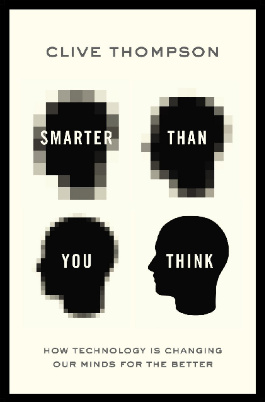
I'm Clive Thompson, the author of Smarter Than You Think: How Technology is Changing Our Minds for the Better (Penguin Press). You can order the book now at Amazon, Barnes and Noble, Powells, Indiebound, or through your local bookstore! I'm also a contributing writer for the New York Times Magazine and a columnist for Wired magazine. Email is here or ping me via the antiquated form of AOL IM (pomeranian99).
ECHO
Erik Weissengruber
Vespaboy
Terri Senft
Tom Igoe
El Rey Del Art
Morgan Noel
Maura Johnston
Cori Eckert
Heather Gold
Andrew Hearst
Chris Allbritton
Bret Dawson
Michele Tepper
Sharyn November
Gail Jaitin
Barnaby Marshall
Frankly, I'd Rather Not
The Shifted Librarian
Ryan Bigge
Nick Denton
Howard Sherman's Nuggets
Serial Deviant
Ellen McDermott
Jeff Liu
Marc Kelsey
Chris Shieh
Iron Monkey
Diversions
Rob Toole
Donut Rock City
Ross Judson
Idle Words
J-Walk Blog
The Antic Muse
Tribblescape
Little Things
Jeff Heer
Abstract Dynamics
Snark Market
Plastic Bag
Sensory Impact
Incoming Signals
MemeFirst
MemoryCard
Majikthise
Ludonauts
Boing Boing
Slashdot
Atrios
Smart Mobs
Plastic
Ludology.org
The Feature
Gizmodo
game girl
Mindjack
Techdirt Wireless News
Corante Gaming blog
Corante Social Software blog
ECHO
SciTech Daily
Arts and Letters Daily
Textually.org
BlogPulse
Robots.net
Alan Reiter's Wireless Data Weblog
Brad DeLong
Viral Marketing Blog
Gameblogs
Slashdot Games

